Spain’s Anti-Tourism Campaign, and How to Visit Responsibly


July 7, 2025 · Updated October 31, 2025 · 4 min read
There’s a reason Spain is a favorite destination for aspiring expats looking to move abroad. The pace of life is slower, the climate is gorgeous, the cost of living is lower. The food is unbelievable. And the people, in general, are warm, friendly, and welcoming.
In recent months, however, that welcome has started to feel a little less warm, at least for tourists. Across popular destinations like Barcelona, Palma de Mallorca, and the Canary Islands, residents are staging protests and hanging banners that say, “Tourists go home.”
The message is blunt, but there’s a reason for it: Over time, the volume of tourists taking advantage of Spain’s many great attributes has risen to unsustainable levels. Growing numbers of visitors, many arriving en masse via cruise ship or low-cost airline, are overwhelming local infrastructure, driving up housing prices, and reshaping communities in ways residents don’t recognize — or benefit from.
While the protests appear to focus on the tourists, the movement isn’t really directed at tourism itself, says Expatsi partner Alastair of Moving to Spain — it’s directed at the government and policies that have led to increased housing prices, economic strain, and the loss of local character and culture in heavily traveled neighborhoods.
It’s not that the locals want tourists to stop coming entirely. It’s just that as entire blocks of homes are converted into Airbnbs, locally owned businesses are pushed out, and locals struggle to afford living in their very own neighborhoods, tourism — and tourists — can be easily identified as a major part of the problem.
But that doesn’t mean you should cancel your trip to Spain entirely — just be more conscious and conscientious about it. As you plan your trip, focus on areas off the beaten path and less assailed by mass tourism. By skipping, or putting off, the more tourist-y attractions in the big cities, you can discover lesser-known gems that provide an even richer experience on your trip. And you’ll be able to have more of a positive, not negative, impact on the local community — as long as you focus on the local community.
Alastair has straightforward advice: “Wherever you go, be a responsible tourist,” he says. “Don’t stay in an Airbnb or an international hotel chain if you can. Stay local and eat local.”
In the interest of doing just that, here are four areas to look at for a less-tourist-y, more-meaningful Spanish vacation.
Northern Spain
Northern is a beautiful, under-explored destination for avoiding the heat at the peak of Spanish summer. La Rioja is one of the least-visited regions in the entirety of Spain, and yet it’s a sure bet for anyone looking for a quiet stay and a wealth of wine. Aragon is a favorite region for hiking, skiing, rafting, and other outdoor pursuits, as well as gorgeous views of nature even for people not inclined to explore it themselves.
Western Spain
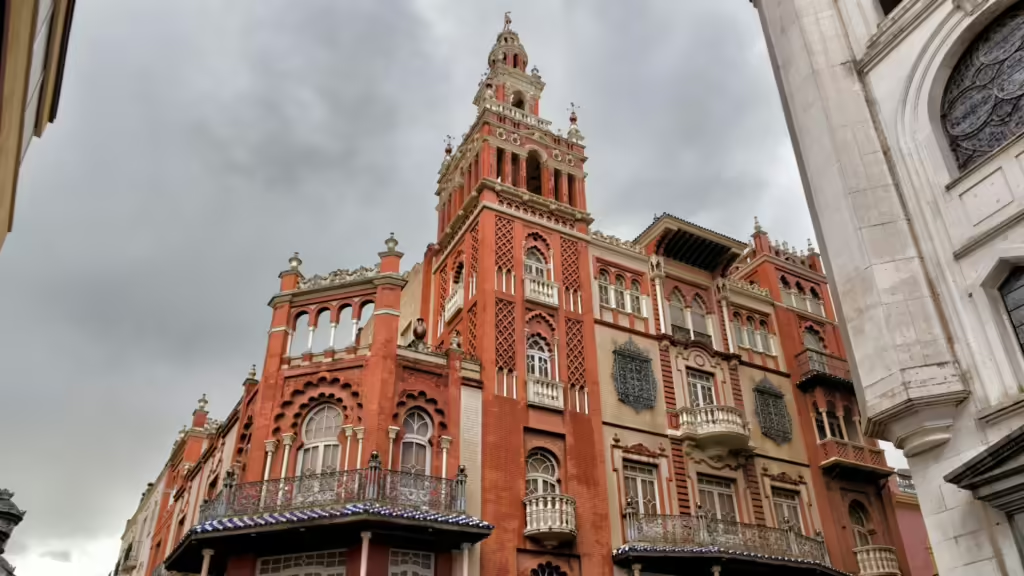
Yes, it does look kind of like the answer to “Where should I go in Spain?” is “all of Spain,” but the western edge of Spain is great for history and culture. Extremadura, in particular, offers arts, food, postcard-perfect small towns, and World Heritage sites that don’t receive nearly the attention they deserve. You might even recognize a few shooting locations from Game of Thrones, but the walled city of Cáceres is far more impressive in person.
The Atlantic coast
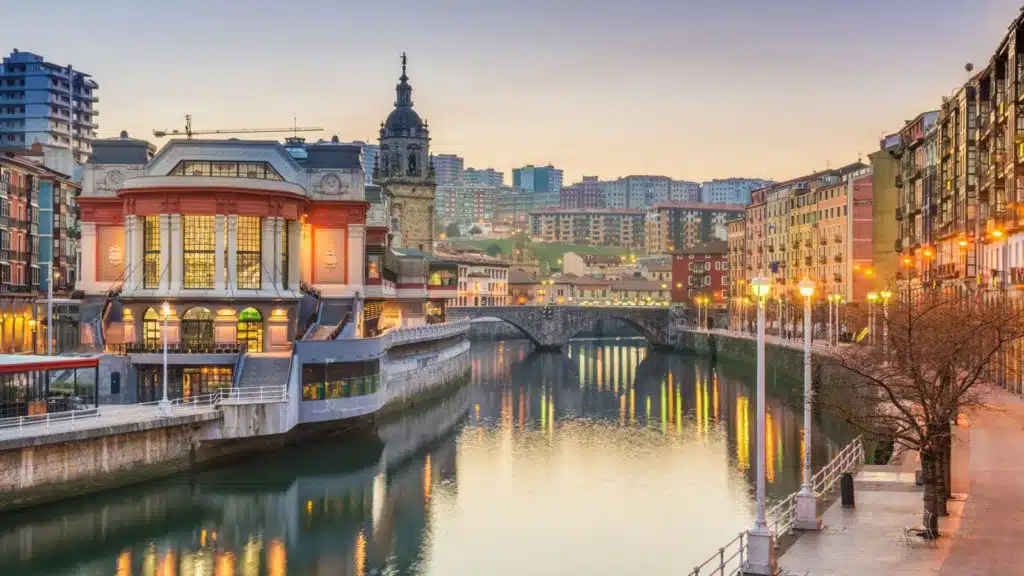
Photo Credit: Shutterstock.
Spain’s Atlantic coast is called “Green Spain” for its beautiful, lush landscapes, and gorgeous views. As beach vacations go, you might find yourself dipping your toes into some rather cool water, but you’ll still be able to enjoy the excellent seafood, local culture, and unspoiled beaches you’re probably looking for in a seaside vacation. Avoid tourist-heavy San Sebastián and travel north and south along the coastline for beautiful views and unique cultural experiences.
City outskirts
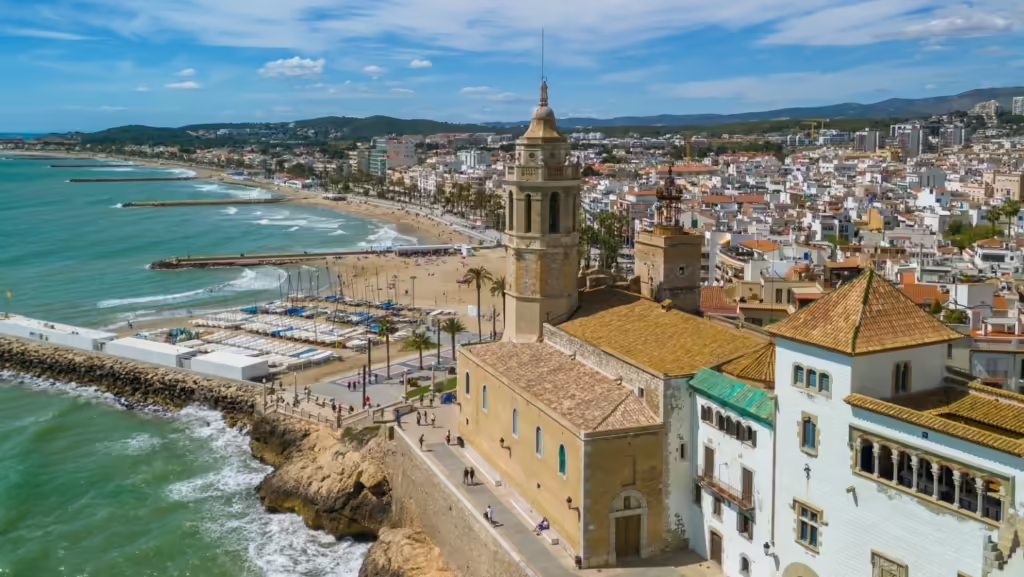
If you’re absolutely set on one of the larger and more protest-heavy cities like Barcelona, Palma de Mallorca, and Madrid, you don’t need to avoid them entirely. The most vehement protests generally take place in and around the city center, where tourism is at its heaviest and most damaging. By staying toward the outskirts and suburbs of large cities, you’ll be more likely to avoid any conflict and have a more enjoyable stay and more positive impact.
Be a good person.
Wherever you travel in Spain, the best way to avoid tourism-related pushback is to be a good tourist, and remember you’re traveling in real communities with real people and real culture, who deserve just as much respect and consideration as you’d want for yourself.
“Come and enjoy Spain, but be respectful,” Alastair says. “Be respectful of the Spanish culture, be respectful of people here, be a respectful tourist, and you won’t have a problem.”