It’s easy to look at your household expenses, sitting at home in the U.S., and think, “That’s okay, if I only turn the lights on on Thursdays, this budget might actually balance.” (That’s possibly why you’re considering moving abroad in the first place — for a lot of people, it is.)
For a lot of Americans, $2,000 a month barely covers rent anymore, much less groceries, healthcare, transportation, and the occasional life-enjoying moment. And you might have heard rumors that in Panama, that same income could support a comfortable, well-rounded lifestyle. And if you’ve heard that, it’s because a lot of the time, it’s the truth.
Here, we take a look at what $2,000 a month can realistically get you in Panama, compared to the lifestyle it can get you in the U.S. (What you learn may not even remotely surprise you!)
(All figures are averages and estimates. Your mileage may vary — this is just to provide a real-world snapshot.)
Housing
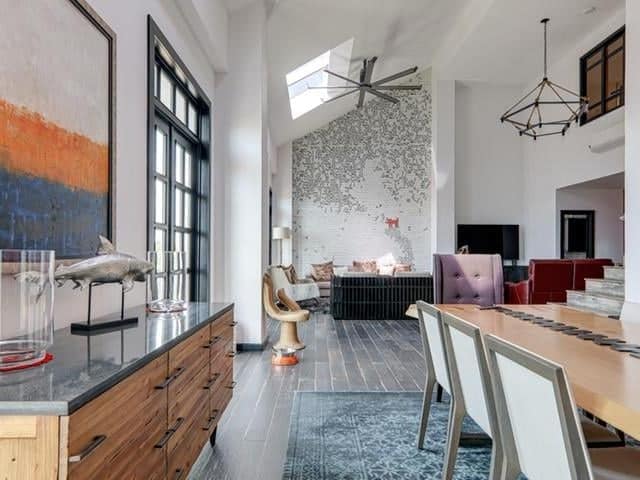
Panama: In much of Panama, $700-$1,000 a month can get you a modern one- or two-bedroom apartment in a safe neighborhood. Think air conditioning, updated appliances, even amenities like a pool, security, or a shared rooftop terrace. Your best luck for a good balance of luxury and price will come in places like David, Boquete, Coronado, or parts of Panama City outside the most expensive neighborhoods. Utilities are typically reasonable, although heavy A/C use can bump up your power bill in hotter regions.
U.S.: In many U.S. cities, $1,200-$1,500 is considered cheap for a one-bedroom — and that’s even without amenities, upgrades, or included utilities. In higher-cost areas, $2,000 might barely cover rent, if that, with nothing left over for the rest of life.
In Panama, housing leaves room in your budget. In the U.S., housing often is the budget.
Food
Panama: Groceries are affordable, especially if you shop locally. Fresh seafood, tropical fruits, staples like rice and beans, and a few bottles of really nice wine could run you $300 a month, and dining out doesn’t have to be a special occasion. A casual meal might cost $5-$8, and a nice restaurant dinner could run $10-$15. A meal out can be a nice treat, not a big splurge.
U.S.: Groceries alone can hit $400-$600 a month, and eating out at a “cheap” restaurant can mean $15-$20 before tip, tax, and drinks.
In Panama, food is a pleasure you can afford. In the U.S., it’s increasingly a source of stress.
Healthcare
Panama: Healthcare is one of Panama’s greatest financial advantages. Doctor visits often cost $20-$40 out of pocket. A lot of medications are affordable without insurance, and private healthcare facilities are modern and widely used by expats. Some residents choose local private insurance (you can get it for under $200 a month), others pay as they go, and they still spend way less than they did in the U.S.
U.S.: Between premiums, deductibles, copays, and surprise bills, healthcare costs can easily dominate a monthly budget, and that’s with insurance. (In 2025, with healthcare costs on the rise, employer-based family insurance premiums averaged $27,000 a year. Out-of-pocket costs for services like prescriptions are expected to go up, too — total national health expenditure per person topped $15,400.) With all the variations in plans — not to mention the increasingly popular “can’t afford it, let’s take a chance” plan — costs vary, but they’re mostly in the area of “don’t ask.”
In Panama, healthcare is predictable and manageable. In the U.S., the attempt to stay alive can wreck lives.
Transportation
Panama: Public transportation is inexpensive and widely available. Buses costs cents, taxis cost dollars, and ride-shares are common in cities and might run you $3-$4 — many people get by without a car at all. And if you do drive, fuel and maintenance costs are generally lower than in the U.S.
U.S.: In a lot of areas, car ownership is non-negotiable — and expensive. Payments, insurance, gas, maintenance, and parking can easily top $500-$700 a month.
Panama makes it easier to live without a car, and the costs that come with it, without sacrificing quality of life.
Lifestyle and Extras
Panama: Yes. Coffee out, weekend trips, Pilates class, beach days, hanging out with friends, surfing lessons — $2,000 leaves enough budget to actually say yes to things that can make your life more enjoyable.
U.S. Ugh. After the essentials, there might not be a lot left. Maybe have your coffee at home? (Any millennial will tell you that’s the way to save up to buy a house.)
In Panama, $2,000 can support a comfortable, balanced lifestyle, particularly outside of the most expensive neighborhoods and with a bit of flexibility. In the U.S., that same $2,000 can feel like it disappears before it hits your bank account. None of which is to say that Panama is right for everyone, but if you’re tired of running the financial numbers and constantly coming up short, there could be a tropical Central American nation that would be glad to have you.
Costa Rica and Panama are our countries of the month for January 2026. Get free webinars and expert advice or plan a scouting trip at our Country of the Month page.